
Technology
Greg Kurtzer's Ginux is now a userspace kernel
By Katherine Langford
Advertisement · Why this ad?
Katherine oversees editorial operations across all six brands. Before joining The Meridan Group, she spent 14 years at the Minneapolis Star Tribune, where she led the metro desk through its digital transformation. She holds a Master's in Journalism from Northwestern's Medill School.
More from Katherine →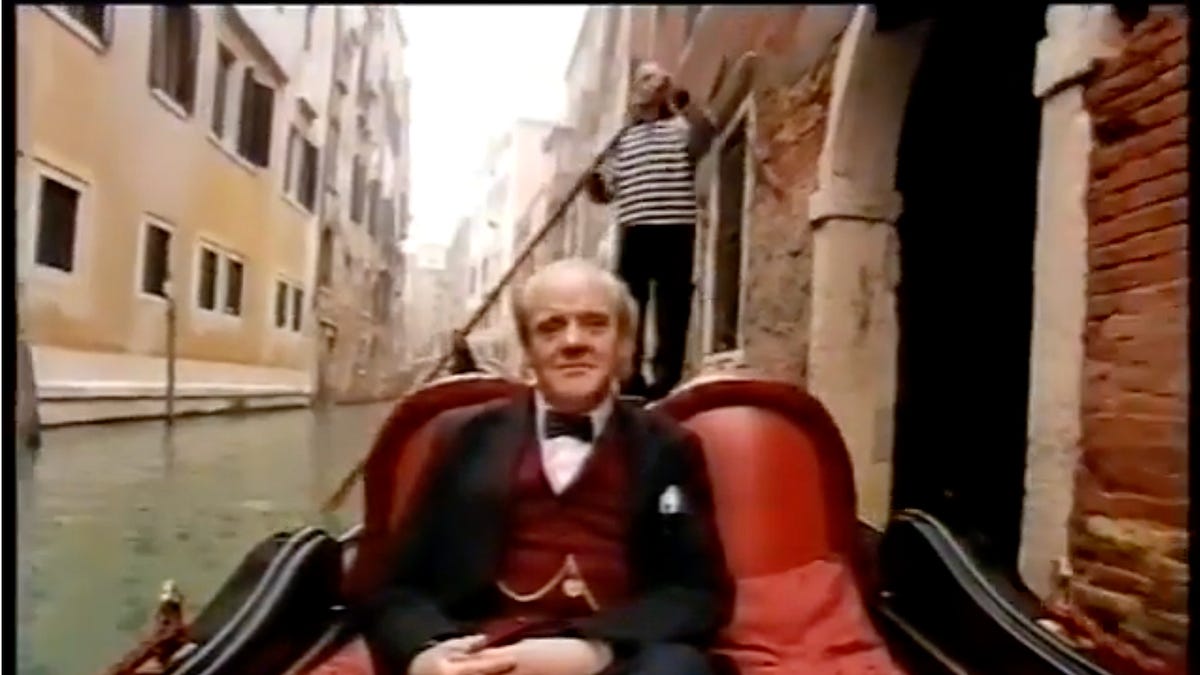
Research taste in history: the importance of learning Sumerian math What I learned from a truly eccentric historian Benjamin Breen Nov 10, 2026 5 3 Share “Variety, not uniformity, is more likely to be the key to progress. The genius of being is whimsical rather than consistent. Our strata show broken bones of histories all forgotten.” — Benjamin Blood , as quoted by William James, 1911 I’m sometimes asked how I think history education and research will change in an era being reshaped by AI. I don’t trust anyone who claims certainty on the topic, because “AI” is such a moving target (and its impacts on the humanities so poorly understood) that any views are provisional. But , it seems to me that we are entering an era in which traits like eccentricity and creativity are going to matter much more than before. Language models excel at pedagogies involving memorization, spaced repetition, and customized feedback. They are also getting good at “brute force” archival research . Yet they remain stuck in a median perspective, a sort of averaged-out, clichéd intellectual blandness that helps explain why frontier models still lack “research taste” in humanistic disciplines. (I think this is also why different frontier models converge on an oddly similar tone and subject matter when it comes to creative writing). This got me thinking about which of my own teachers were most unexpected, most “out of distribution,” relative to the intellectual paths that AI systems converge on. The first person I thought of was a man I knew for only about nine months, when I was a visiting student at Oxford as a twenty-year-old. But the time I spent with Dr. Allan Chapman , who passed away earlier this year, was genuinely life-altering for me. And the reason was because he was so immersed in the foreign country of past minds that he was almost like a time traveler. In the coming years, as I’ll argue below, I believe this ability to draw from alien worlds of thought will become both more important and more rare. Subscribe Share On one level, Allan Chapman was a cliché. As might be apparent from the screenshot above — from one of his several television appearances as a history presenter — Chapman embraced the persona of an Oxbridge don. He wore a waistcoat, he had floppy hair, and he spent much of his life pacing rain-misted medieval quadrangles. This reminiscence from one of his students in the late 1970s matches the version of him I met circa 2005: Allan was a true eccentric, kind, friendly and always ready to share his enthusiasm for the history of science, especially the human stories that always form the basis of science. He always sported impressive ginger sideburns like a Victorian gentleman, dressed in tweeds and a deerstalker, and wore wire-rim glasses. I remember he always carried two pocket watches in his waistcoat pockets, as wristwatches were not his thing. One of the timepieces was set on GMT and the other on Oxford local mean sidereal time, so in summer neither would actually tell the correct local time. I remember my initial tutorial meetings with Allan taking place in Oxford’s history faculty building, but he soon proposed that we begin meeting, instead, at a local pub: the King’s Arms. As I recall, he always ordered a strong cup of tea. I don’t believe I’ve ever met a human being who enjoyed tea more than Allan Chapman. One week, he explained to me that we would have to reschedule our meeting because he was due to have tea, instead, with the Archbishop of Canterbury (“an old school fellow, you know — I do hope you will understand”). As a newcomer to English society, all of this led me to assume that Chapman was an upper-class, Evelyn Waugh sort of character. Slowly, though, it dawned on me that he was in fact just the opposite. As he put it in an interview : I came from a hard-working, intelligent and loving working-class family, but to whom going to university was on roughly the same level as going to the Moon… An academic education was not on the horizon. The bright lads became electricians, the less bright went into semi-skilled jobs, and for the rest it was the mill, the factory or the pit. He was fascinated by machinery of all kinds, an expert in clockwork, geared devices, and telescopes. But most of all, he was an expert in extracting meaning out of seemingly useless knowledge. Allan was my first introduction to the field of history of science. He began our lessons in a way that I found baffling. He insisted that I learn the rudiments of Sumerian-Babylonian astronomy, mathematics and the “ base-60 ” number system. This sort of thing, in other words: Allan never fully explained to me why this was so important to him. At first, I found this deeply frustrating. Surely, I told myself, wasting my time doing multiplication in cuneiform script was useless knowledge. It eventually became apparent that this was exactly what he wanted me to learn. Broken bones of histories all forgotten I never did get the hang of multiplication in base-60, and I never will. But what I learned from the experience of trying to learn this arcane field ended up changing my life. The meta-lesson I took away from it boils down to this: The history of science only makes sense if we focus with all of our hearts and minds on understanding useless things, alien epistemologies, and outmoded ideas . Why did highly intelligent people believe in phlogiston ? How did Sumerians calculate without the use of a zero? How did Tycho Brahe’s theory of the solar system work, and why was it convincing? If you teach the history of science, medicine, and technology only as a series of triumphant discoveries, you fail to capture the thought processes that actually led to those discoveries — and the thousand other wrong turns and odd byways that coexisted and competed with them. And if you miss those thousand wrong turns, you miss the raw materials that allow us to usefully analyze the choices made by actors at the time. In other words, useless knowledge is not useless at all. It is, in fact, the foundation of developing research taste in history. Allan had a mind drawn to the non-obvious — to variety, rather than uniformity. He was, for instance, one of the world experts on Robert Hooke , a close associate (and at times, a bitter enemy) of Isaac Newton. Hooke may well be the most consequential scientific figure who is not a household name, in part because his interests were scattered across a dozen different fields, from architecture to microscopy (he was even the author of the first scientific paper on the psychoactive effects of cannabis ). Some other things I remember Chapman talking about, to give you a sense of his own arcane range of interests: • Aristotle’s love of marine biology • The Antikythera mechanism • Do aliens exist? • How do medieval clocks work? • Cornelis Drebbel’s 1620 submarine • Medieval Islamic automata • Giordano Bruno and the problem of evil in an infinite cosmos Thinking in ways that are “out of distribution” (in the sense of not falling within the expected range) does not mean being contrarian in the Silicon Valley sense. Chapman was not a reactionary. He did not disagree simply to disagree, and he was not a polemicist or an ideologue. He was just really, really curious . Res Obscura is a reader-supported publication. To receive new posts and support my work, consider becoming a free or paid subscriber. Subscribe Research taste and the foreign country of the past In a recent post about the question of recursive self-improvement in AI systems, Dean W. Ball notes that research taste is “incredibly challenging to measure objectively.” It may be that this is not a question of scaling up more compute — that, instead, there is some qualitative difference between an AI system achieving good results in clearly-defined domains involving a task, and the same system being original in a human-li